
TL;DR
Side guide rollers are small rollers mounted near the edge of a conveyor belt that prevent the belt from drifting into the conveyor structure. They control belt mistracking by acting as containment devices (think guardrails, not steering wheels) and should only contact the belt edge during abnormal drift, never during normal operation. Chronic mistracking still requires root-cause fixes like alignment correction, load centering, and proper training idlers. Side guides are valuable as edge protection and damage prevention, but they are not a substitute for solving the underlying tracking problem.
What Is a Side Guide Roller?
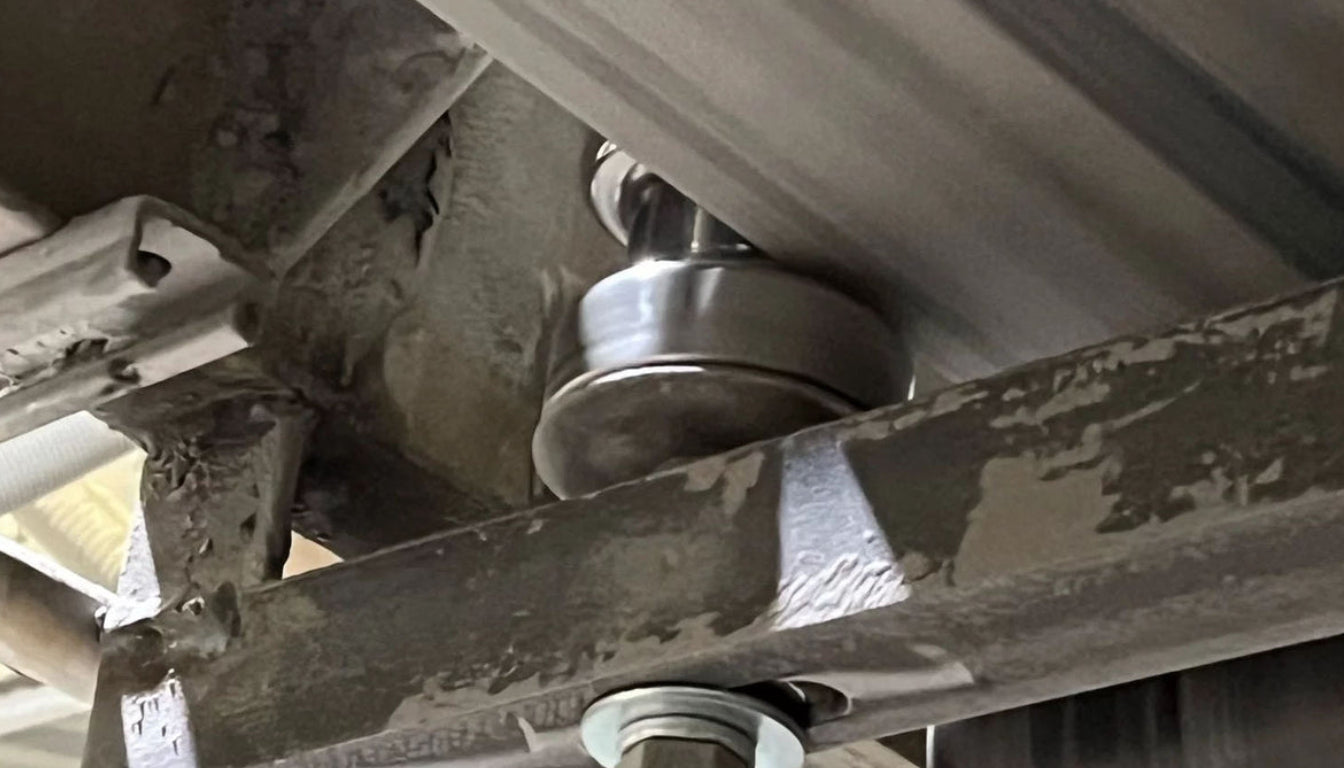
A side guide roller (also called an edge roller or side guide idler) is a small roller mounted vertically or at an angle beside a conveyor belt. Its job is to prevent the belt from running into the conveyor frame, structural steel, or adjacent equipment when the belt drifts off center.
The critical distinction most people miss: side guide rollers are containment devices, not correction devices. They limit how far a belt can wander. They do not actively steer the belt back to center the way a self-aligning training idler does.
This matters because misunderstanding the role of side guide rollers leads to misapplication, which leads to chewed-up belt edges and a false sense of security. Multiple authoritative sources in conveyor engineering, including Smalis Conveyors and Precision Pulley & Idler, state that side guide rollers are not recommended as the primary method for making belts run straight.
If you want to understand the different types of guide rollers for conveyor belts and where each one fits, that comparison is worth reading alongside this article.
The Physics That Actually Steers a Conveyor Belt
Before understanding how side guide rollers work to control belt mistracking, you need to understand what makes a belt mistrack in the first place.
The Friction-First Rule
The governing principle of belt tracking is simple: a conveyor belt moves toward the side that contacts friction first, or the side with more friction. Martin Engineering’s foundational reference on conveyor behavior explains this clearly: the belt migrates toward whichever side reaches friction before the other.
Picture a book sitting on a table. Place a pencil underneath one edge. Push the book forward and it turns toward the pencil side, because that side has more contact and more friction. Conveyor belts behave the same way on idlers and pulleys.
This is why idler squareness, pulley alignment, and symmetric loading are the true steering controls on a conveyor. They change where and how friction acts across the belt width.
The Upstream Principle
Here’s the detail that saves the most troubleshooting time: visible mistracking at any point on the conveyor is usually caused by something upstream. Martin Engineering’s conveyor design references emphasize that tracking at any location is more influenced by upstream components than downstream ones.
So when a belt is running off at the head pulley, the problem likely lives somewhere in the carry side behind it. Putting a side guide roller at the head pulley might stop the belt from falling off, but it does nothing to remove the cause.
Understanding these two principles (friction-first steering and upstream causation) is essential context for understanding both the value and the limits of side guide rollers.
How Side Guide Rollers Control Belt Mistracking
With the physics established, here is what side guide rollers actually do in practice.
They Set a Physical Boundary
A side guide roller sits near the belt edge with a small gap. During normal operation, the belt never touches it. When the belt drifts beyond its acceptable range, the edge contacts the roller. The roller provides a rolling surface instead of a stationary frame edge, which means the belt contacts something that moves with it rather than scraping against fixed steel.
This prevents two immediate problems: the belt edge grinding against the conveyor structure, and the belt walking completely off the conveyor.
They Reduce Damage During Transient Events
Belts don’t always mistrack chronically. Sometimes a slug of off-center material hits the belt, or a frozen roller thaws and seizes for a few minutes, or wind pushes a belt on an outdoor conveyor. These transient events can shove a belt sideways temporarily. Side guide rollers absorb that momentary drift and keep the belt on the conveyor until conditions normalize.
This is where side guide rollers earn their keep. They are protecting the belt and the structure during events that are brief and unpredictable.
They Do Not Steer the Belt Back to Center
This is the point most people get wrong. A side guide roller pushing against the belt edge does not generate a reliable centering force. Flexco’s maintenance resources explain that a roller on the edge of the belt is not always effective at correcting tracking and note that belts respond to tension and friction across their width, not to edge pressure.
Pushing a belt sideways from its edge is like trying to steer a car by pushing on the door panel. You might deflect it slightly, but you’re fighting the system rather than working with it.
If you’re seeing signs of a misaligned conveyor belt, side guides can limit the damage, but solving the root cause requires addressing alignment, loading, or component condition.
Where to Install Side Guide Rollers (and Where Not To)
Placement determines whether side guide rollers help or cause additional problems.
Set Them With Clearance: Near, Not Touching
Every credible installation guide converges on the same rule: side guide rollers should not touch the belt edge during normal operation. Precision Pulley & Idler’s installation instructions specify that side guide idlers must be positioned so they do not contact the belt edge when running normally.
The practical gap varies by belt width and application, but the principle is universal. If your side guide rollers are always in contact with the belt, you’ve converted a tracking problem into an edge-wear problem.
Don’t Place Them at the Pulley
This is a high-value warning that many installers miss. Smalis Conveyors states explicitly that side guide rollers should not bear against the belt edge once the belt is on the pulley, because at that point the belt is constrained by wrap angle and tension geometry. Edge pressure there accomplishes nothing except scrubbing the belt edge against the roller.
In other words, once the belt wraps a pulley, no amount of side pressure will move it laterally. You’re just grinding rubber.
Best Locations for Side Guide Rollers
Side guides work best in the carry and return runs between pulleys, particularly:
Near loading zones where transient off-center loads are common
Along return runs where the belt is less constrained
At points where the belt passes close to structural steel
Near transfer points where spillage or buildup can push the belt sideways
A proper guide roller bracket simplifies mounting and allows adjustment of that critical clearance gap.
Common Causes of Belt Mistracking
Understanding why belts mistrack explains why side guide rollers alone are never the complete answer.
Misaligned or Seized Idlers
A seized roller creates a friction imbalance across the belt width. PROK’s engineering resources describe how a seized roller generates uneven friction and heat, and the belt tracks toward the side of the seized roller. One locked bearing on a return idler can walk a belt off the conveyor in minutes.
Think of it through the friction-first rule: a seized roller is like a brake on one side. The belt moves toward the brake.
Idler and Pulley Geometry Errors
Even small squareness errors (an idler that’s a fraction of a degree off perpendicular to the belt travel direction) create a differential in where friction engages across the belt. One side reaches friction before the other, and the belt walks toward that side. Martin Engineering’s behavior basics reference covers this in detail.
Off-Center Loading
Martin Sprocket’s installation documentation notes that off-center loading causes the belt to run off center, accelerates edge wear, and causes spillage. When material consistently hits one side of the belt, the weight imbalance pulls the belt that direction.
If you use side guide rollers to fight off-center loading rather than fixing the chute, you’re just converting the problem into constant edge grinding. For a broader look at these issues, our overview of common conveyor belt problems and solutions covers the most frequent culprits.
Five Common Mistakes With Side Guide Rollers
1. Using Them as the Primary Tracking Fix
Side guide rollers control belt mistracking by containing it, not by correcting it. Treating them as the tracking solution means you never fix the root cause, and the belt edge pays the price. Smalis Conveyors warns directly against using guide rollers to make belts run straight.
2. Installing Them Too Close to the Belt Edge
If there’s zero clearance, the roller contacts the belt continuously. This creates constant friction on the belt edge, accelerating wear, and in severe cases contributing to ply separation. The roller itself wears faster too.
3. Placing Them at or on Pulleys
As covered above, edge pressure on a wrapped pulley is wasted force. It can’t move the belt and just destroys the edge.
4. Fixing Where You See the Problem Instead of Looking Upstream
This is the most widespread mistake in belt tracking. The visible drift is almost always a symptom of something further back on the conveyor. Understanding the consequences of a misaligned conveyor belt helps clarify why chasing symptoms wastes time and money.
5. Ignoring Seized Rollers and Material Buildup
A guide roller can’t overcome the steering force of a locked idler or a pile of material wedged under one side of the belt. Regular inspection of all rollers and cleaning of buildup is more effective than adding more guide rollers.
Field note: Practitioners on Reddit’s r/IndustrialMaintenance frequently point out that most tracking headaches blamed on “bad guides” are actually caused by splice squareness, seized bearings, or accumulated misalignment. One maintenance tech described a situation where every roller had been adjusted differently over time, and the only solution was to start over: square everything, then make small adjustments from a known baseline. Another practitioner shared a useful heuristic: adjusting one side of a roller outward makes the belt track the opposite way, and encouraged visualizing the belt’s path over the roller to understand why.
Side Guide Rollers vs. Other Tracking Solutions
Not every tracking problem needs the same tool. Here’s how side guide rollers compare to the other common approaches.
Solution |
What It Does |
Corrects Tracking? |
Best For |
|---|---|---|---|
Side guide roller |
Limits lateral drift, protects belt edge from structure contact |
No (containment only) |
Transient drift protection, edge damage prevention, tight spaces |
Self-aligning training idler |
Pivots in response to belt drift, redirecting belt toward center via friction-first physics |
Yes (active steering) |
Chronic mild mistracking on long conveyors |
Sensing-roll trainer |
Uses guide rolls to detect drift and pivot a carrying idler, creating a centering force |
Yes (mechanically actuated) |
Moderate to severe mistracking, automated correction |
Alignment and commissioning |
Squaring idlers, leveling structure, centering load, correcting splices |
Yes (root cause removal) |
Every conveyor, always the first step |
A key confusion worth clearing up: some “trainers” use guide rolls as sensors that trigger a pivot mechanism. These are fundamentally different from standalone side guide rollers. In sensing-roll trainers, as described by Martin Engineering in World Coal, the guide rolls detect belt drift and pivot an idler, which then steers the belt back using the friction-first principle. The guide rolls in that system are the sensing element, not the corrective element.
Standalone side guide rollers have no pivot mechanism. They just sit there and catch the belt edge when it wanders too far.
What About Reversing Belts?
Angled or skewed tracking methods reverse their centering effect when the belt changes direction, which is why Belt Power warns against using angled rollers on reversing belts. Practitioners on Reddit’s r/millwrights confirm that reversing belts need systems specifically designed to detect and respond to both travel directions.
Side guide rollers, by contrast, are direction-agnostic. They sit at the belt edge regardless of which way the belt runs. This makes them particularly useful on reversing conveyors as a containment measure, even though they still don’t provide active correction.
When Side Guide Rollers Are the Right Call
Side guide rollers to control belt mistracking make the most sense in specific situations:
Good applications:
Protecting the belt edge from contacting structure during startup or transient conditions
Return-side containment where the belt is lightly tensioned and prone to wander
Tight spaces near transfer points where full training idler frames won’t fit
Reversing belt conveyors where direction-sensitive trainers are problematic
As a safety measure near walkways or equipment where a belt running off could cause injury or damage
Not enough on their own:
Chronic mistracking from structural misalignment
Persistent off-center loading from poorly designed chutes
Severe tracking problems caused by seized rollers or material buildup
Situations where the belt is constantly riding the guide roller (this means you need root-cause work, not more containment)
For applications that call for a durable side guide roller, especially in abrasive environments like mining, aggregate, or cement, PROGUIDE’s steel side guide roller is built from mild carbon steel with options for heat treatment and mechanical dust covers. If you’re comparing roller materials and sizes, the 2026 buyer’s guide for side guide rollers breaks down what to look for.
Not sure whether side guide rollers are the right fit for your situation? Contact the PROGUIDE team to discuss your application before ordering.
FAQ
Do side guide rollers actually fix belt mistracking?
Not in the corrective sense. Side guide rollers work to control belt mistracking by containing it, preventing the belt from running off the conveyor or into the structure. They do not steer the belt back to center. Chronic mistracking requires root-cause fixes: squaring idlers, leveling the frame, centering the load, and replacing seized rollers.
How much clearance should side guide rollers have from the belt edge?
Side guide rollers should not touch the belt edge during normal operation. The exact gap depends on belt width and application specifics, but the principle is consistent across manufacturers: set them close enough to catch abnormal drift, far enough that they don’t create constant edge contact. If a guide roller is always touching the belt, the clearance is wrong or the belt has a tracking problem that needs addressing.
Can side guide rollers damage the belt?
Yes. If they are in constant contact with the belt edge, they will accelerate edge wear and can contribute to ply separation over time. Flexco’s maintenance resources note that a belt pushing hard against an edge roller generates significant force with little corrective effect and can damage the belt. Proper clearance and root-cause tracking work prevent this.
Where should side guide rollers not be installed?
Do not place side guide rollers where the belt is wrapping a pulley. At that point, the belt is locked in by wrap angle and tension, and edge pressure cannot move the belt laterally. Install them in the carry or return runs between pulleys.
What is the difference between a side guide roller and a self-aligning training idler?
A side guide roller is a passive containment device that limits how far the belt can drift. A self-aligning training idler (or tracker) pivots in response to belt drift and uses the friction-first steering principle to actively push the belt back toward center. Trainers with sensing rolls use guide rolls to detect drift and pivot a carrying idler, creating a real corrective force. The two serve different purposes and are often used together.
Do side guide rollers work on reversing conveyors?
Yes, and this is one of their practical advantages. Because side guide rollers simply sit at the belt edge, they function the same regardless of belt travel direction. Many angled or skewed tracking devices reverse their corrective effect when the belt changes direction, making them unsuitable for reversing applications without special design. Side guides avoid this problem entirely.
Why does my belt mistrack even though the guide rollers are installed?
Because side guide rollers are containment, not correction. The belt is still responding to friction and tension imbalances caused by things like misaligned idlers, off-center loading, seized bearings, or an out-of-square splice. The guide rollers can keep the belt from running completely off, but they can’t fix what’s causing it to drift. Look upstream from where you see the problem and inspect idler alignment, roller condition, and load centering.
Are steel side guide rollers better than plastic ones?
In abrasive environments like mining, aggregate, and cement, steel guide rollers generally last significantly longer than plastic, UHMW, or polyurethane alternatives. Plastic rollers can wear through quickly when handling abrasive materials, while steel construction resists impact and abrasion. Browse PROGUIDE’s idler and return roll collection to compare available options for your application.